

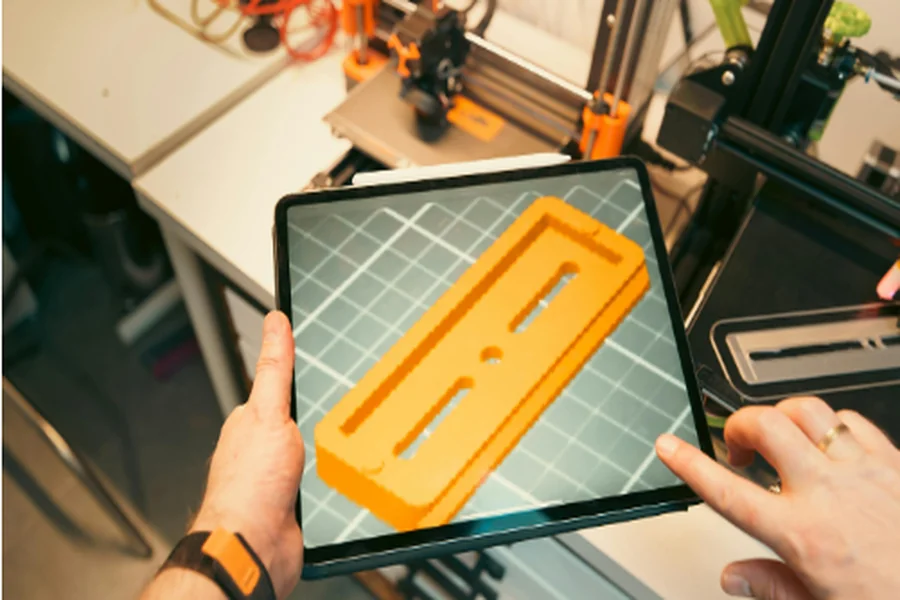
As a 3D printing enthusiast, choosing the right CAD software can greatly impact your projects. You need tools that balance affordability with functionality, especially if you’re just starting or looking to enhance your skills.
Various options exist, each catering to different skill levels and needs. One standout is SolidWorks for Makers, a professional-grade program adapted for hobbyist use, offering advanced part and assembly modeling for precise designs.
Another strong contender is Autodesk Fusion 360, a cloud-based platform that merges CAD, simulation, and slicing features in one seamless program.
Whether you’re looking for free options or more advanced 3D design programs, finding the right software for your printer setup is essential for efficient and successful printing.
In this post, we’ll discuss the best budget CAD software for 3D printing, breaking down their strengths, compatibility, and why they might be the perfect match for your creative workflow.
4 Best Budget CAD Software for 3D Printing Enthusiasts
For makers who want powerful design tools without overspending, these four CAD programs offer the right mix of functionality, ease of use, and compatibility with 3D printers.
SolidWorks for Makers: Pro-Level Power, Hobbyist Focus
When you’re seeking professional-grade CAD capabilities without breaking the bank, SolidWorks for Makers emerges as an exceptional option for 3D printing enthusiasts.
As one of the top inexpensive CAD programs available for non-commercial use, it offers a full-featured program that excels in parametric modeling, assemblies, and part creation. This software maintains the same modeling engine found in professional environments, ensuring precision and reliability.
If your projects involve moving parts or tight tolerances, SolidWorks handles complex designs effortlessly. Compatible with both macOS and Windows, it caters to serious hobbyists who need robust tools without the burden of a full business license, allowing you to focus on innovation and experimentation with ease.
Autodesk Fusion 360: Feature-Rich and Accessible
Autodesk Fusion 360 offers a thorough solution for 3D printing enthusiasts who want advanced features without the hefty price tag.
This hybrid platform integrates CAD, CAM, and simulation, ensuring you have everything you need in one place. Being cloud-based, it allows seamless access across devices and fosters collaboration.
Its parametric modeling system lets you easily adjust designs while simulation tools help you test structural integrity before printing.
With support for exporting in STL, OBJ, and 3MF formats, preparing your designs for slicing is straightforward.
Fusion 360 balances functionality and user-friendliness, making it ideal for both beginners and advanced users.
SelfCAD Pro: All-in-One Simplicity for 3D Printing
SelfCAD Pro stands out as an all-in-one solution for 3D printing enthusiasts, merging design and slicing functionalities into a single platform.
You’ll appreciate its clean, user-friendly interface that offers built-in tutorials, making the learning curve easier. With SelfCAD, you can create your design and send it directly to the printer without toggling between multiple tools.
It supports essential file types like STL, ensuring your projects are printer-ready. Despite its simplicity, it provides robust features for sculpting, modeling, and basic animations.
As a browser-based tool, it’s accessible, even on less powerful PCs, catering to both beginners and intermediate users.
3D Slash: A Visual Approach to 3D Design
For those looking for a more visual and intuitive method of 3D design, D Slash offers a unique block-based modeling approach that simplifies the creative process.
You’ll “slash” blocks to create your models, making it accessible for beginners and younger users. The web-based platform requires no installations, allowing you to start designing immediately without high-end hardware.
While it lacks parametric workflows, it excels in quick prototyping and learning fundamentals. You can export designs in STL format for seamless 3D printing.
Although the free version has limitations, the budget-friendly upgrade remains a solid choice for casual users.
Can I use AutoCAD for 3D printing?
Can you use AutoCAD for 3D printing? Yes, you can create 3D models and export them in STL format, which most slicers accept.
However, keep in mind that AutoCAD primarily focuses on architectural and engineering designs, making it less efficient for crafting parts tailored for 3D printing.
While it offers robust tools for modeling, you might find specialized CAD software more advantageous for 3D printing tasks.
Consider your project requirements carefully; AutoCAD can work, but it may not be the best choice for every 3D printing enthusiast aiming for streamlined workflows and specialized features.
What file formats do I need for 3D printing?
When preparing your 3D model for printing, you’ll encounter several essential file formats. The most common formats are STL, OBJ, and 3MF.
Each of these formats serves specific purposes; STL is widely used for its simplicity and compatibility, while OBJ supports complex textures and colors.
The 3MF format is gaining traction due to its ability to store more detailed information about the model.
All the CAD software listed in this guide supports exporting to these formats, allowing your model to shift seamlessly into slicing software.
How does SolidWorks for Makers differ from the full version of SolidWorks?
SolidWorks for Makers differs from the full version of SolidWorks in several key ways, particularly in terms of file compatibility, licensing, and feature access. While both versions share the same powerful 3D modeling core, SolidWorks for Makers is cloud-based and designed specifically for hobbyists, students, and non-commercial users.
One major distinction is file compatibility: the Maker’s version applies a digital watermark to native files, making them incompatible with SolidWorks Professional. This means you can’t open or edit files interchangeably between the two.
Additionally, SolidWorks for Makers uses cloud data management for storing and sharing designs, whereas the full version supports local and network-based file management.
Licensing also sets them apart. SolidWorks for Makers is offered at a reduced cost and is restricted to non-commercial use, while the professional version is intended for commercial applications.
Certain advanced add-ins available in the full version are also not included in the Maker’s edition. However, you can still export files in neutral formats like .stp or .iges for broader compatibility with other CAD software.
Pick the Right CAD Tool for Your 3D Printing Journey
Choosing the right CAD software for your 3D printing projects depends on your goals, experience level, and workflow preferences.
Whether you prefer the advanced modeling of SolidWorks for Makers, the all-in-one convenience of Fusion 360 or SelfCAD, or the simplicity of 3D Slash, there’s a program that fits your needs without stretching your budget.
Each of these options supports essential file formats and is compatible with most 3D printers.
So take your time, explore what each offers, and pick the one that matches your creative process best. The right tool can turn your ideas into reality, one layer at a time.